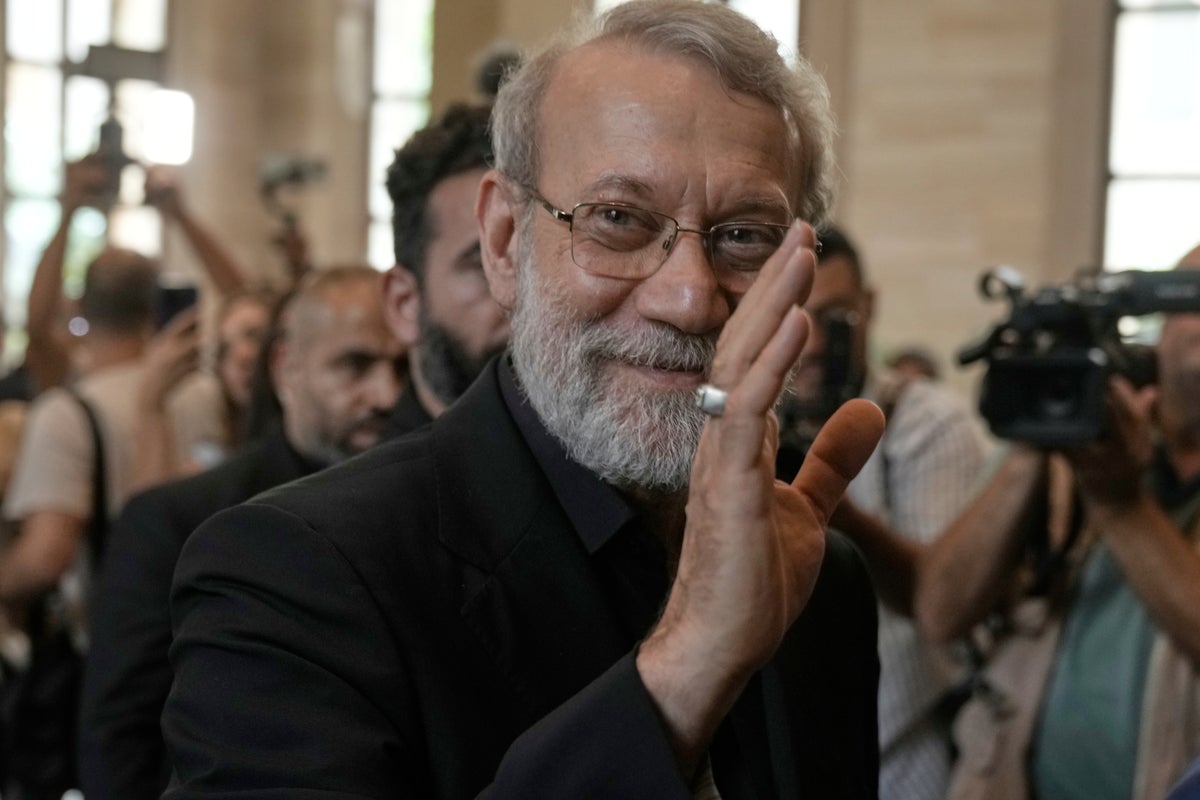
Ali Larijani: Interim Power Broker Navigates Post-Khamenei Iran
In a dramatic turn of events that has sent shockwaves across the Middle East and beyond, Iran finds itself at a pivotal juncture. Following the tragic death of Supreme Leader Ayatollah Ali Khamenei in a US-Israeli airstrike on February 28, 2026, a profound power vacuum emerged. Stepping into this critical void is veteran Iranian politician Ali Larijani, the current Secretary of Iran’s Supreme National Security Council (SNSC). His swift ascent to the role of a key interim power broker highlights his unique position within the Iranian establishment, tasked with overseeing an expansive portfolio that includes national security, regional diplomacy, and crucial nuclear negotiations.
Larijani's immediate declaration on March 1, 2026, announcing the establishment of a temporary leadership council, underscored his centrality in navigating the nation through an unprecedented crisis. This moment marks not just a change in leadership, but a potential recalibration of Iran’s strategic direction, with Larijani at the helm during this fraught transitional period. The loss of not only the Supreme Leader but also Iran's Armed Forces Chief of Staff Abdolrahim Mousavi in the same strikes has amplified the sense of urgency and the formidable challenges facing Larijani and the interim administration.
The Shifting Sands of Iranian Leadership: Larijani's Ascent
The sudden and violent passing of Supreme Leader Khamenei has undeniably plunged Iran into an immediate leadership crisis. However, the emergence of Ali Larijani as the central figure overseeing the transition is not by chance. An establishment insider, Larijani hails from one of Iran's most respected clerical families, granting him an inherent legitimacy and deep understanding of the country's intricate political and religious landscape. His career is marked by unwavering loyalty to the Supreme Leader, combined with a reputation for pragmatic engagement across Iran's often-rival factions. This unique blend of characteristics positions him as a credible and unifying figure in a time of extreme national vulnerability.
Larijani's re-emergence into the highest echelons of power prior to Khamenei's death had already signaled his growing influence. Appointed as Secretary of the Supreme National Security Council in August last year, he quickly resumed a central role in Iran's security establishment. This appointment followed a significant 12-day air conflict between Iran and Israel, in which the U.S. also participated, underscoring Larijani's historical experience in navigating high-stakes regional tensions. His previous tenure heading the SNSC two decades prior further burnishes his credentials, showcasing a long history of engagement at the core of Iran's national security decision-making. In the wake of Khamenei's absence, Larijani’s deep institutional knowledge and political acumen are invaluable assets for maintaining stability.
A Broad Portfolio: Security, Diplomacy, and Domestic Challenges
As the interim power broker, Ali Larijani's responsibilities extend across an extraordinarily broad and complex spectrum. At the forefront is national security, a paramount concern given the circumstances of Khamenei's death. He immediately faced the challenge of responding to what he described as attempts by the United States and Israel to "plunder and disintegrate Iran," issuing stark warnings to "secessionist groups" against any opportunistic actions. This firm stance on territorial integrity and national sovereignty is crucial for projecting strength during a period of perceived weakness.
Beyond immediate security concerns, Larijani's portfolio encompasses critical regional diplomacy and the sensitive area of nuclear negotiations. He has been actively managing Tehran's regional ties, which are essential for maintaining Iran's influence and alliances in a volatile Middle East. Simultaneously, his role has involved overseeing Iran’s efforts to reach a nuclear deal with the United States. This dual capacity to manage both confrontational security issues and delicate diplomatic overtures highlights his strategic versatility. Domestically, Larijani has also been at the forefront of efforts to suppress anti-government protests, a role that led to U.S. sanctions in January for allegedly directing a deadly crackdown. This illustrates the complex internal and external pressures he must balance, affirming state control while also seeking external de-escalation.
For a deeper dive into his rise in this critical period, read: Khamenei's Absence: Ali Larijani Rises as Iran's New Power Broker.
The Pragmatist's Stance: Navigating Nuclear Ambitions and Regional Tensions
Larijani's approach to foreign policy, particularly concerning the nuclear issue, has often been characterized by a notable pragmatism, even amidst escalating tensions. His public statements have consistently struck a conciliatory tone, indicating a willingness to find common ground. "In my view, this issue is resolvable," Larijani told Oman state television last month, referring to talks with the U.S. He further clarified, "If the Americans’ concern is that Iran should not move toward acquiring a nuclear weapon, that can be addressed." This pragmatic outlook is critical in a post-Khamenei Iran, where a more hardline approach could further destabilize the region.
His diplomatic efforts prior to the supreme leader's death underscore this strategic flexibility. Larijani undertook a significant trip to Oman, a traditional mediator, to prepare for indirect nuclear talks with the U.S. This occurred as Washington amassed military forces in the Middle East, attempting to pressure Iran into concessions. Simultaneously, he made several trips to key ally Moscow to discuss a range of security ties, demonstrating his commitment to shoring up strategic alliances while exploring diplomatic off-ramps. This dual strategy of engaging with adversaries through diplomacy while strengthening partnerships with allies is a hallmark of his pragmatic foreign policy, a crucial asset in the immediate aftermath of Khamenei's absence.
His pragmatic approach to foreign policy, particularly concerning the nuclear issue, is further explored in: Pragmatist Larijani Takes Helm: Iran's Key Security & Nuclear Figure.
What's Next for Iran? Implications of Larijani's Interim Role
The establishment of a temporary leadership council, spearheaded by Larijani, signals a crucial phase for Iran. The primary objective of such a council would be to ensure continuity and stability in governance, particularly in security and foreign policy, while the complex process of selecting a permanent Supreme Leader unfolds. This period will test Larijani’s leadership mettle and his ability to navigate both immediate external threats and the intricate internal power dynamics.
Key challenges and considerations for Iran under Larijani's interim leadership include:
- Maintaining National Unity: In the wake of an external attack and leadership vacuum, Larijani must ensure that Iran's various political factions and social groups remain cohesive against perceived threats.
- International Relations: The world will be closely watching Iran’s next moves. Larijani's pragmatic approach could offer a window for de-escalation with Western powers, particularly on the nuclear file, while simultaneously reinforcing alliances with partners like Russia and China.
- Succession Process: The interim council's most vital long-term task is to manage the selection of a new Supreme Leader. This process, traditionally handled by the Assembly of Experts, is inherently political and could lead to internal jockeying for power. Larijani's influence during this phase will be critical in shaping the future direction of the Islamic Republic.
- Economic Stability: Sanctions and regional instability continue to exert immense pressure on Iran's economy. The interim leadership will need to devise strategies to mitigate these impacts and prevent further domestic unrest.
Larijani's position as an interim power broker is fraught with challenges, yet it also presents an opportunity for Iran to recalibrate its domestic and foreign policies. His blend of experience, loyalty, and pragmatism could be the steady hand needed to guide Iran through this turbulent period.
In conclusion, Ali Larijani's emergence as the interim power broker in a post-Khamenei Iran signifies a critical moment for the nation and the broader Middle East. Tasked with managing an expansive array of responsibilities from national security and regional diplomacy to nuclear negotiations, his pragmatic yet firm approach will be instrumental in navigating the immediate crisis. While his role is explicitly interim, the decisions made under his leadership will undoubtedly shape Iran's trajectory for years to come, impacting everything from its international standing to its domestic stability and the eventual succession of the Supreme Leader. The world watches keenly as Larijani steers Iran through these unprecedented and highly uncertain times, a true test of his strategic acumen and political resilience.