The Unforeseen Vacuum: Khamenei's Abwesenheit and Larijani's Immediate Ascent
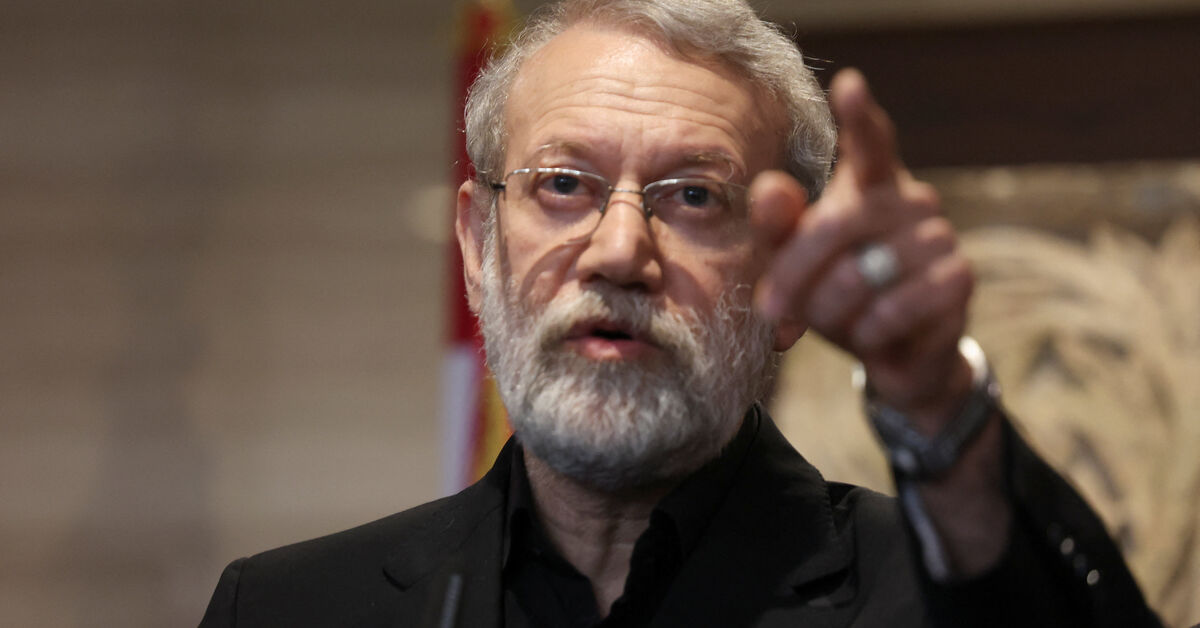
The landscape of Iranian power has been irrevocably altered following the shocking news of Supreme Leader Ayatollah Ali Khamenei’s death in a devastating US-Israeli airstrike on February 28, 2026. This unprecedented event has plunged the Islamic Republic into a profound leadership vacuum, demanding immediate and decisive action. In this critical hour, veteran politician Ali Larijani, currently serving as the influential Secretary of Iran’s Supreme National Security Council (SNSC), has rapidly emerged as the nation’s pivotal interim power broker. His swift announcement on March 1st regarding the formation of a temporary leadership council underscores his immediate assumption of command, overseeing a vast portfolio that includes national security, delicate regional diplomacy, and crucial nuclear negotiations.
The sudden loss of the Supreme Leader, a figure whose authority had been unchallenged for decades, represents a monumental shift. Khamenei's
Abwesenheit has created an imperative for a steady hand, and Larijani, with his deep roots within the establishment and a reputation for strategic pragmatism, appears to be that figure. His rise signals not merely a change in personnel, but potentially a significant reorientation of Iran's domestic and international policies during this turbulent transition. This article delves into Ali Larijani's background, his complex role in this new era, and the intricate challenges he faces in steering Iran through one of its most critical periods.
Ali Larijani: A Pragmatist Navigating a Crisis
Ali Larijani's emergence as a central figure in post-Khamenei Iran is not a sudden phenomenon but the culmination of a long, distinguished career marked by both loyalty and strategic flexibility. His ability to bridge divides and adapt to shifting political currents positions him uniquely to lead in this uncertain time.
A Career Defined by Loyalty and Pragmatism
Hailing from one of Iran's most prominent clerical families, Ali Larijani is an quintessential establishment insider. His career has been a testament to unwavering loyalty to the system, particularly to the late Supreme Leader Khamenei, under whom he held numerous senior positions. This loyalty, however, has always been tempered by a pragmatic approach to governance and foreign policy, allowing him to navigate the often-rival factions within Iran’s complex political landscape.
Larijani's recent return to the heart of Iran’s security establishment saw him reappointed as Secretary of the Supreme National Security Council in August of the previous year. This wasn't his first stint at the helm of the SNSC; he previously led the council two decades prior. His return was particularly significant, occurring in the wake of a 12-day air conflict between Iran and Israel, which also involved the United States. This re-appointment showcased the deep trust placed in his strategic capabilities and his capacity to manage high-stakes security challenges. His trusted status was further emphasized by a recent trip to Oman to prepare for indirect nuclear talks with the U.S., even as Washington significantly bolstered its military presence in the Middle East. Such high-level diplomatic engagements, coupled with multiple trips to key ally Moscow to discuss security ties, painted a clear picture of Larijani's resurgent influence long before the tragic events of February 28th.
Balancing Act: Domestic Suppression and International Diplomacy
Larijani's portfolio as SNSC Secretary has been remarkably broad, encompassing critical domestic security matters, complex nuclear negotiations, and intricate regional diplomacy. This expansive mandate highlights his central role in virtually every aspect of Iran's strategic outlook. However, this dual responsibility has also presented stark contradictions.
Just a month before Khamenei's passing, in January, the United States imposed sanctions on Larijani for allegedly directing a deadly crackdown on anti-government protests that swept Iran. U.S. government announcements explicitly detailed his alleged role at the forefront of efforts to suppress these demonstrations. This illustrates a challenging facet of his leadership: a willingness to employ firm domestic control while simultaneously projecting a pragmatic and open stance on international issues.
On the diplomatic front, particularly concerning the contentious nuclear program, Larijani has consistently struck a conciliatory tone. He notably told Oman state television that the nuclear issue was "resolvable," adding, "If the Americans’ concern is that Iran should not move toward acquiring a nuclear weapon, that can be addressed." This pragmatic outlook on one of Iran's most sensitive issues is a clear indicator of his preferred approach to de-escalation and negotiation, even in the face of immense pressure. The tension between his hardline stance on internal dissent and his flexibility in foreign policy defines much of his current political persona and will shape his strategy as an interim leader.
For a deeper understanding of Larijani's role in security and nuclear matters, consider reading:
Pragmatist Larijani Takes Helm: Iran's Key Security & Nuclear Figure.
Shaping Iran's Future: Challenges and Opportunities for the Interim Power Broker
The vacuum left by Khamenei's
Abwesenheit presents both immense challenges and critical opportunities for Ali Larijani and the temporary leadership council. The nation faces immediate security threats, internal instability, and the daunting task of establishing long-term leadership.
Navigating Regional Tensions and Internal Threats
The circumstances of Khamenei's death – a US-Israeli airstrike – immediately escalate regional tensions to an unprecedented level. Larijani wasted no time in condemning these actions, accusing the United States and Israel of attempting to "plunder and disintegrate Iran." He issued a stern warning to "secessionist groups" contemplating any action, promising a "harsh response," a declaration broadcast by state television amidst a wave of attacks that had begun almost 24 hours prior. Compounding the tragedy, Iran's Armed Forces Chief of Staff, Abdolrahim Mousavi, was also reported killed in the same strikes, further weakening Iran's military command structure at a critical juncture.
Larijani's immediate priorities will undoubtedly center on stabilizing the security situation, both externally and internally. The recent crackdown on anti-government protests, for which he was sanctioned, demonstrates his willingness to suppress dissent forcibly. This approach will likely continue as he seeks to maintain internal cohesion and deter any perceived attempts at destabilization by external or internal actors. The balance between projecting strength and avoiding further escalation will be a tightrope walk, demanding skillful diplomacy and strategic restraint.
The Role of the Temporary Leadership Council
The establishment of a temporary leadership council, as announced by Larijani, is a crucial constitutional mechanism to ensure continuity of governance in the absence of a Supreme Leader. While the specific composition and mandate of this council are yet to be fully detailed, it will likely comprise high-ranking clerical figures, judicial heads, and military commanders. Its primary function will be to manage day-to-day affairs, maintain national security, and, most importantly, oversee the process of selecting the next Supreme Leader.
**Key considerations for this interim period include:**
* **Succession Process:** The timing and method of selecting a permanent Supreme Leader will be paramount. This process is typically handled by the Assembly of Experts, but the current volatile circumstances may influence its proceedings.
* **Maintaining Stability:** The council's immediate task is to prevent any further breakdown of order, both from external aggression and internal unrest. This requires strong leadership and coordinated action across all branches of government and military.
* **International Relations:** The council will need to project an image of continuity and control on the international stage, reassuring allies and deterring adversaries. Larijani's experience in foreign policy will be invaluable here.
The decisions made by this interim body, heavily influenced by Larijani, will profoundly shape Iran's trajectory. For more insights into how Larijani is navigating this complex period, consider reading:
Ali Larijani: Interim Power Broker Navigates Post-Khamenei Iran.
Conclusion
The passing of Supreme Leader Ayatollah Ali Khamenei marks an epochal moment for Iran, ushering in an era of profound uncertainty and critical decisions. In the immediate aftermath of Khamenei's
Abwesenheit, Ali Larijani has unequivocally stepped forward as Iran's most prominent interim power broker. His extensive experience, pragmatic outlook, and firm grasp of both domestic and international affairs position him as a crucial figure in stabilizing the nation. As he steers the temporary leadership council, Larijani faces the immense challenge of managing heightened regional tensions, addressing internal unrest, and guiding the complex process of succession. His ability to navigate these turbulent waters will not only define his legacy but will also determine Iran's direction in a rapidly evolving geopolitical landscape. The world watches keenly as Larijani endeavors to uphold the stability and integrity of the Islamic Republic during this unprecedented transition.