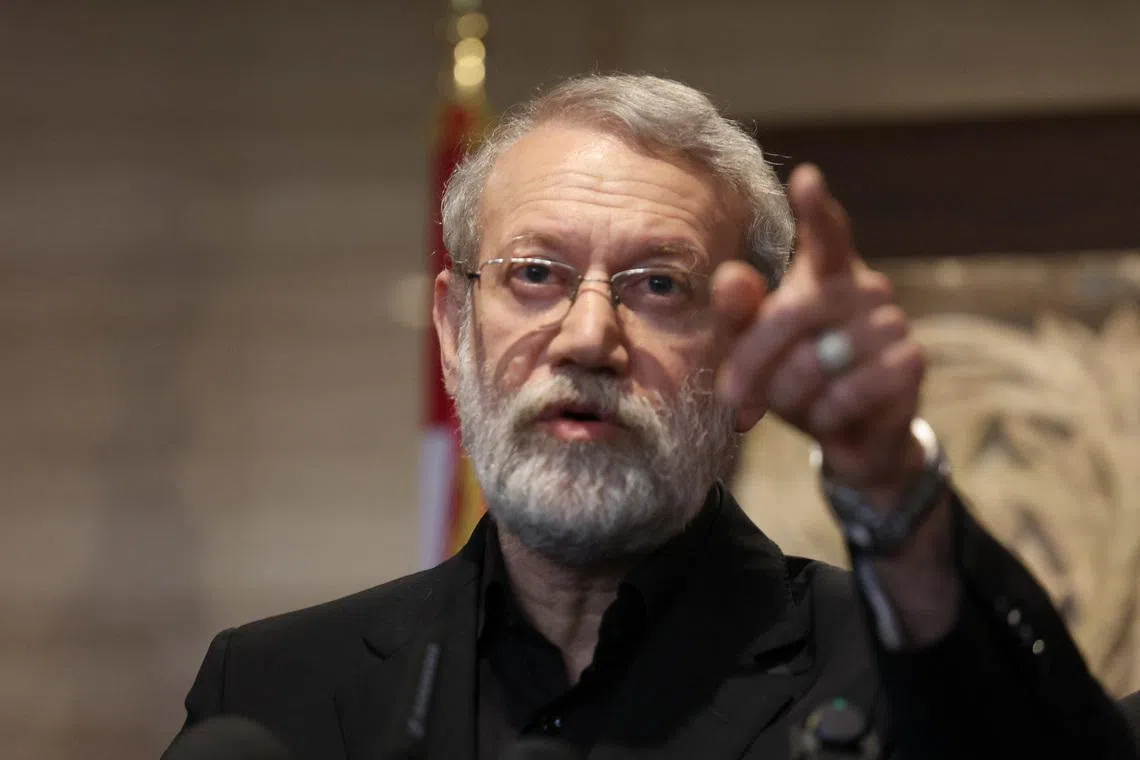
A New Dawn for Iran? Ali Larijani Steps into the Void
The geopolitical landscape of the Middle East was irrevocably altered on February 28, 2026. In a seismic event that sent shockwaves across the globe, Supreme Leader Ayatollah Ali Khamenei was tragically killed in a US-Israeli airstrike. This unprecedented vacuum at the pinnacle of Iranian power immediately raised urgent questions about succession, stability, and the future trajectory of the Islamic Republic. In the immediate aftermath, a familiar yet increasingly prominent figure, Ali Larijani, has rapidly emerged from the shadows, stepping forward as a pivotal interim power broker. His sudden ascent, characterized by pragmatism and an intricate understanding of Iran's complex political machinery, marks a critical juncture in the nation's history. The crucial period following
Khamenei's absence has thrust Larijani into the international spotlight, where he is now tasked with navigating a nation grappling with profound internal and external pressures.
On March 1, mere hours after the devastating strikes that also claimed the life of Iran's Armed Forces Chief of Staff Abdolrahim Mousavi, Larijani made a crucial announcement: a temporary leadership council would be established to guide the nation. This statement underscored his immediate and central role in managing the crisis. As the current Secretary of Iran's Supreme National Security Council (SNSC), Larijani’s extensive portfolio already spanned critical areas, from delicate nuclear negotiations to complex regional diplomacy and the challenging task of maintaining internal order. His re-emergence into such a high-stakes leadership role highlights a career defined by loyalty to the Supreme Leader and an enduring reputation for pragmatic engagement across Iran's often-fragmented political factions.
The Architect of Security: Larijani's Extensive Portfolio
Ali Larijani is no stranger to the levers of power in Iran. An establishment insider, he hails from one of the country's most influential clerical families, providing him with deep roots within the Islamic Republic's religious and political elite. His career trajectory has seen him hold numerous senior positions, including an earlier stint heading the SNSC two decades prior. This seasoned experience makes him uniquely suited to the daunting challenges presented by
Khamenei's absence.
Larijani's return to the heart of Iran’s security establishment was formally cemented following last year's 12-day air conflict between Iran, Israel, and the United States. Appointed as Secretary of the SNSC in August, he swiftly took command of a broad and critical agenda. This included spearheading Iran’s efforts to forge a nuclear deal with the United States – a testament to his pragmatic approach even amid escalating tensions. Interestingly, this push for diplomacy came just a month after Washington sanctioned him in January for allegedly directing a deadly crackdown on anti-government protests, showcasing the complex and often contradictory nature of Iranian politics and Larijani's role within it. His ability to concurrently manage diplomatic overtures with adversaries while asserting firm control domestically speaks volumes about his political acumen and resolve.
Larijani's reputation for navigating intricate power dynamics has been well-earned. He possesses a unique ability to bridge divides between the system's often-rival factions, a crucial skill in a post-Khamenei era where internal consensus will be paramount. Observers are keen to see how he utilizes this skill to unify diverse elements within the ruling structure, from the Revolutionary Guard Corps to the traditional clergy and reformist elements, under the banner of the interim leadership council. For more insights into this pivotal transition, consider reading
Khamenei's Absence: Ali Larijani Rises as Iran's New Power Broker.
Navigating Geopolitical Storms: Diplomacy and Deterrence
The sudden demise of the Supreme Leader occurred amidst heightened regional tensions and ongoing efforts to de-escalate the nuclear standoff with the West. Larijani's recent diplomatic activities underscore his critical role in managing these external pressures. Just a month before the airstrikes, his status as a trusted strategist was highlighted by a trip to mediator Oman, where he laid the groundwork for indirect nuclear talks with the U.S. This diplomatic push occurred as Washington continued to bolster its military presence in the Middle East, hoping to leverage pressure for concessions from Tehran.
Larijani's public statements on the nuclear issue have consistently struck a pragmatic chord. "In my view, this issue is resolvable," he told Oman state television, referring to the talks with the U.S. He added, "If the Americans’ concern is that Iran should not move toward acquiring a nuclear weapon, that can be addressed." This willingness to engage and seek common ground, even with a long-standing adversary, illustrates the "pragmatist" label often attached to him. However, his pragmatism is balanced by a strong nationalist stance. Following the attacks, Larijani vehemently accused the United States and Israel of attempting to "plunder and disintegrate Iran" and issued a stark warning to "secessionist groups" that any destabilizing actions would be met with a "harsh response." This dual approach – open to negotiation yet firm in defending national interests – will be central to Iran's foreign policy under his interim stewardship.
Beyond the Western front, Larijani has also revitalized Iran's strategic alliances. In recent months, he undertook multiple trips to key ally Moscow to discuss a range of security ties, signaling his broader engagement in high-level international diplomacy. His efforts to solidify these alliances will be crucial in balancing Western influence and securing Iran's regional position during this period of profound uncertainty.
The Road Ahead: Challenges and Opportunities for Interim Leadership
The immediate challenge for Ali Larijani and the temporary leadership council is to ensure a smooth and stable transition of power. The death of a Supreme Leader is an event of immense constitutional and spiritual significance, and the process of succession is traditionally fraught with complexities. Larijani's experience and perceived pragmatism will be essential in preventing internal power struggles from destabilizing the country further, especially in the wake of significant anti-government protests that swept Iran in January, as detailed in the U.S. government's sanctions announcement against him.
Tips for Observing the Transition:
- Composition of the Leadership Council: Pay close attention to who is appointed to the temporary leadership council. The balance of hardliners, pragmatists, and clerics will indicate the immediate direction Iran intends to take.
- Rhetoric on Nuclear Deal: Monitor Larijani's and the council's statements regarding nuclear negotiations. Any significant shift in tone could signal either a renewed push for a deal or a hardening of Iran's stance.
- Handling of Internal Dissent: How the interim government addresses any resurgence of anti-government sentiment will be a key indicator of its stability and approach to domestic affairs.
- Regional Engagements: Observe Iran's interactions with regional adversaries and allies. Will there be an escalation or de-escalation of proxy conflicts?
The concept of "khamenei abwesenheit larijani" – or Larijani's rise in Khamenei's absence – encapsulates a period of immense strategic recalibration for Iran. The interim council will face pressure from various factions within Iran’s complex political system, from conservative ideologues demanding adherence to revolutionary principles to more moderate voices advocating for greater engagement with the international community. Larijani's ability to balance these competing demands while upholding national sovereignty and ensuring internal stability will define his legacy in this extraordinary chapter. Navigating this delicate balance will require immense political skill and foresight, as explored further in
Ali Larijani: Interim Power Broker Navigates Post-Khamenei Iran. The future of Iran, and indeed much of the Middle East, hinges on the choices made during this critical transition.
Conclusion
The sudden void left by Supreme Leader Khamenei's passing has propelled Ali Larijani into an undeniably central and challenging role. As a veteran pragmatist deeply embedded within Iran's security and political establishment, his leadership of the temporary council during this period of "khamenei abwesenheit larijani" is crucial for domestic stability and international relations. Larijani's extensive experience in managing nuclear negotiations, regional diplomacy, and internal security provides a steady hand in a tumultuous time. His immediate tasks include consolidating power, addressing the severe threats from external adversaries, and guiding the nation through an unprecedented leadership transition. The decisions made by Larijani and the interim council in the coming months will not only shape Iran's destiny but will also profoundly impact the geopolitical balance of the Middle East and beyond.